 14.9 °C,
3.5 m/s,
76.2 %
14.9 °C,
3.5 m/s,
76.2 % 
News
This week, Jelgava Municipal Police officers Māris Vēveris and Eduards Grīnbergs returned from an experience exchange visit to Jelgava’s twin city of Carmel, USA. They travelled to develop new skills and gain insight into the day-to-day work of the Carmel Police Department. The officers brought back valuable observations and vivid impressions of how daily operations, technology, and communication with the community are organised within the Carmel Police Department. The day-to-day work of law enforcement in the United States includes a continuous preventive presence, the use of modern technologies, and close cooperation with the local community.
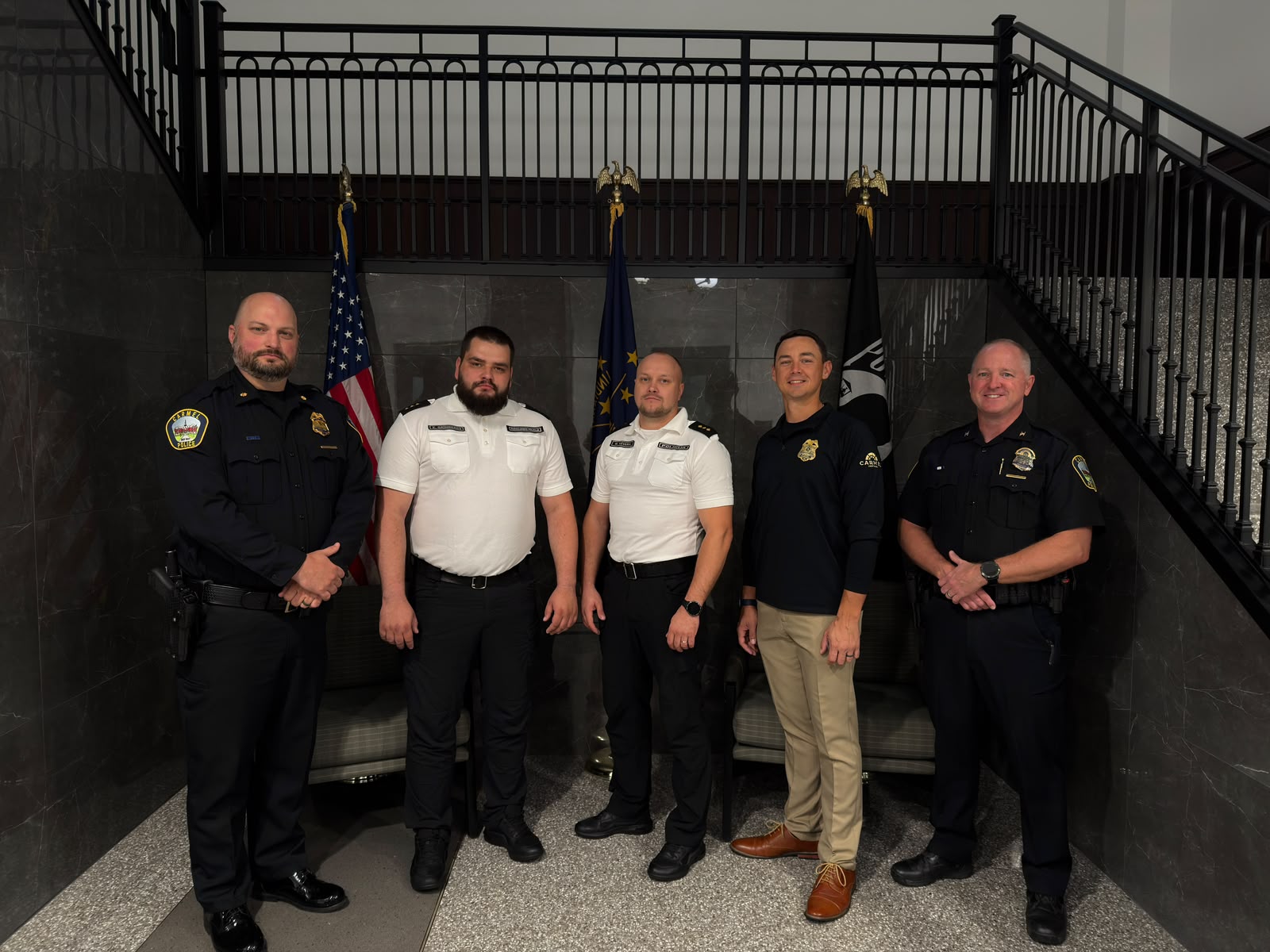
For one week, the inspectors worked alongside patrol officers of the Police Department, responded to calls, conducted traffic stops, and participated in training sessions with K-9 handlers. They also visited the county jail, took part in other activities related to daily police work, and expanded their knowledge by participating in theoretical and practical training sessions conducted by officers of the Carmel Police Department.
As M. Vēveris explains:
“During the experience exchange, we had the opportunity to actively participate in and observe several specialised training sessions. It was particularly valuable to see the K-9 handlers’ training, where great emphasis is placed on the dogs’ ability to operate in real urban environments, as well as tactical training, firearms exercises, and Emergency Vehicle Operations (EVO), including vehicle stops and the apprehension of offenders. We also became acquainted with the judicial system, the jail, the detoxification facility, the crisis management centre, and the dispatch centre, and saw how closely all these services cooperate with one another to form a common system focused on ensuring public safety.”
M. Vēveris says that one of the most striking observations was the dynamic nature of police work and the autonomy of individual units. During their shifts, U.S. police officers remain constantly mobile within their designated sectors, providing continuous patrols and monitoring public order. At the same time, officers have considerable discretion to make independent decisions when responding to everyday calls.
In dangerous situations, the available resources allow several units to be dispatched to the scene within a short period of time, ensuring immediate support. Great importance is also placed on the principles of Community Policing, with officers actively engaging in conversations with residents even when there is no specific call for service, gradually building mutual trust.
When resolving conflicts, de-escalation is always given priority: using a clear, calm but firm tone of voice, maintaining a safe distance, and reducing emotional tension, with physical force used only as a last resort.
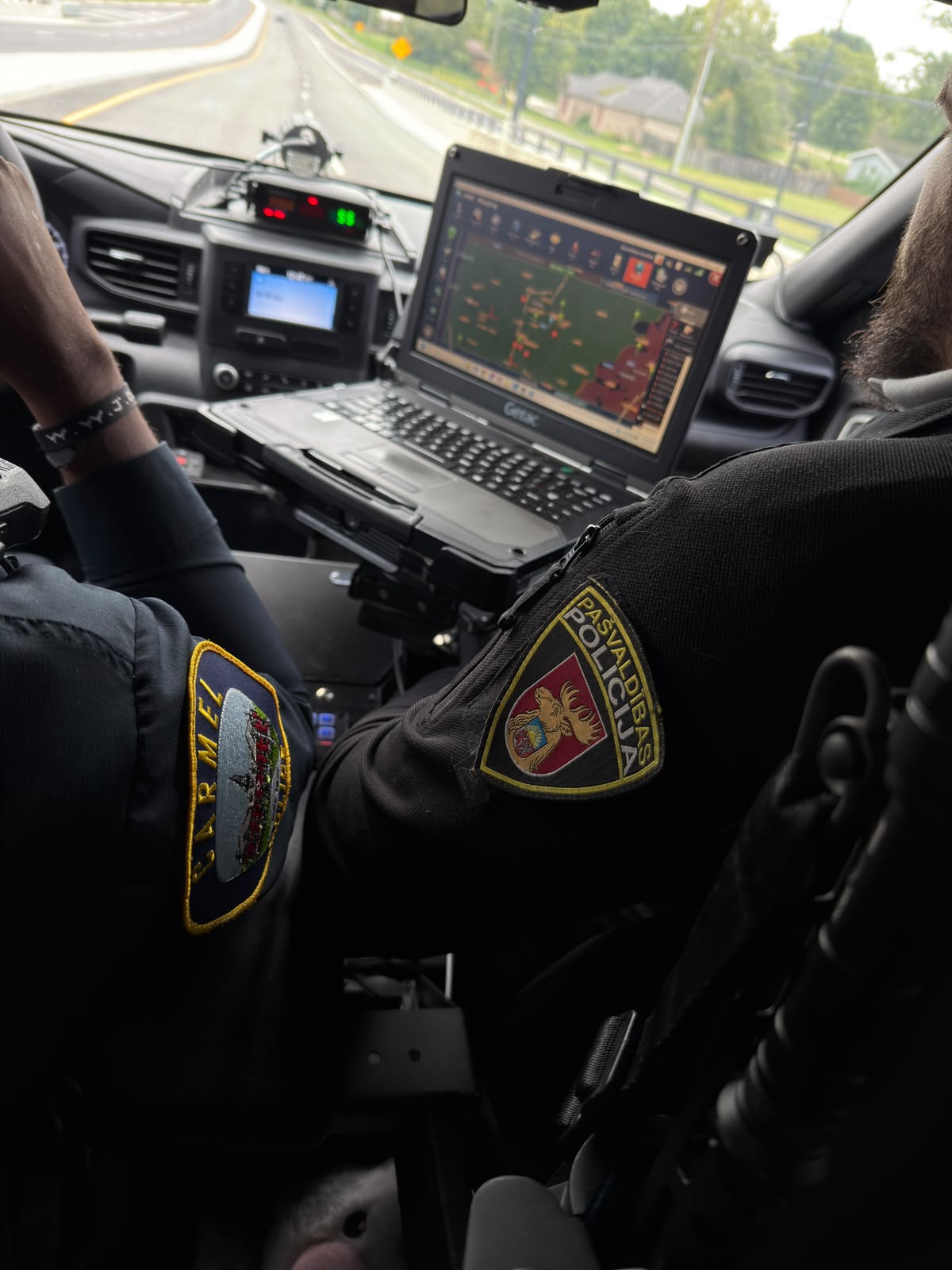
“Technical equipment also plays an important role and is designed as much as possible to ensure officers’ safety and convenience. Patrol vehicles function as fully equipped mobile workstations, featuring integrated mobile data terminals (MDTs), cameras, and access to databases, allowing most documentation and checks to be completed on site from inside the vehicle.
The automation of technology is particularly noteworthy. For example, body-worn cameras are integrated with vehicle cameras and weapon holsters, automatically activating recording during dangerous situations.
Given the U.S. firearms environment and the fact that firearms are widely owned by members of the public, police officers are also equipped for high-risk situations, including backup Glock pistols and AR-15 semi-automatic rifles.
In addition, comprehensive digitalisation of processes, simplified data-entry forms, and real-time navigation systems significantly reduce the amount of time officers need to spend in the office. Ergonomic Kevlar tactical body armour and specialised load-bearing straps distribute weight evenly and reduce strain on the back during long shifts,” says M. Vēveris, an inspector with the Jelgava Municipal Police.
He adds that seasonal and time-based planning is also essential, with additional resources and patrol units deployed on specific days and at specific times—for example, during weekend nights around entertainment venues or following city events.
Although this requires additional expenditure, in many U.S. municipalities residents are willing to contribute to the cost of public safety through their taxes because they want high-quality services and the best possible equipment to protect themselves and their property.
Drawing on the U.S. experience, specific proposals have emerged for improving safety and public order in the city, based on modern technologies, intelligent resource planning, open communication, and mutual support.
“One of the main initiatives is to introduce a Hot-Spot map as part of the new version of the Electronic Incident Log. Using the database of calls for service, the system would analyse in real time the locations where incidents involving excessive noise, alcohol consumption, or minor disorderly conduct are most frequently recorded. During their patrols, officers would prioritise these locations, similar to how U.S. police officers continuously monitor situations in their designated areas using computers in their patrol vehicles,” M. Vēveris emphasises.
It should be noted that the exchange programme is one of the initiatives included in the cooperation programme established between Jelgava and Carmel.
This article has been translated from Latvian to English using the help of ChatGPT AI.